Download
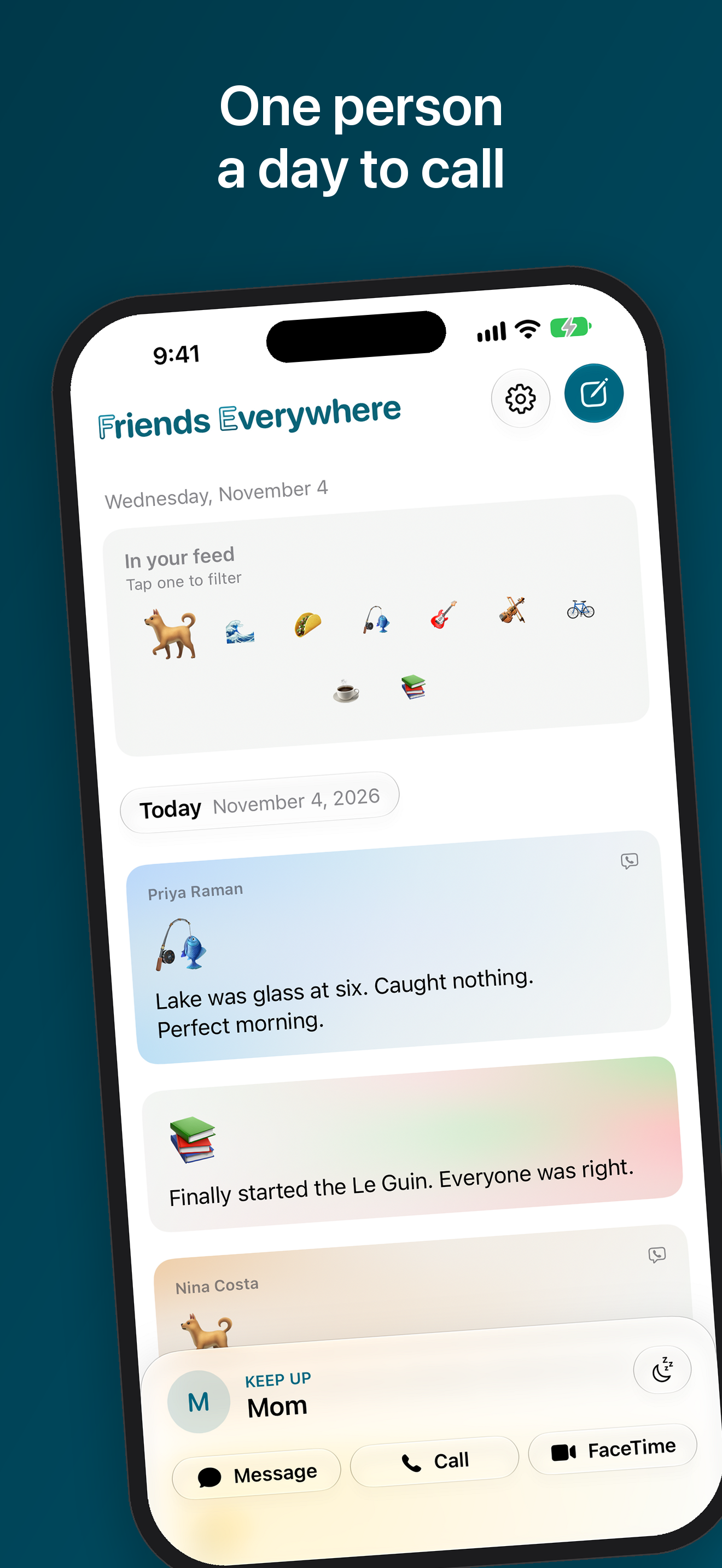
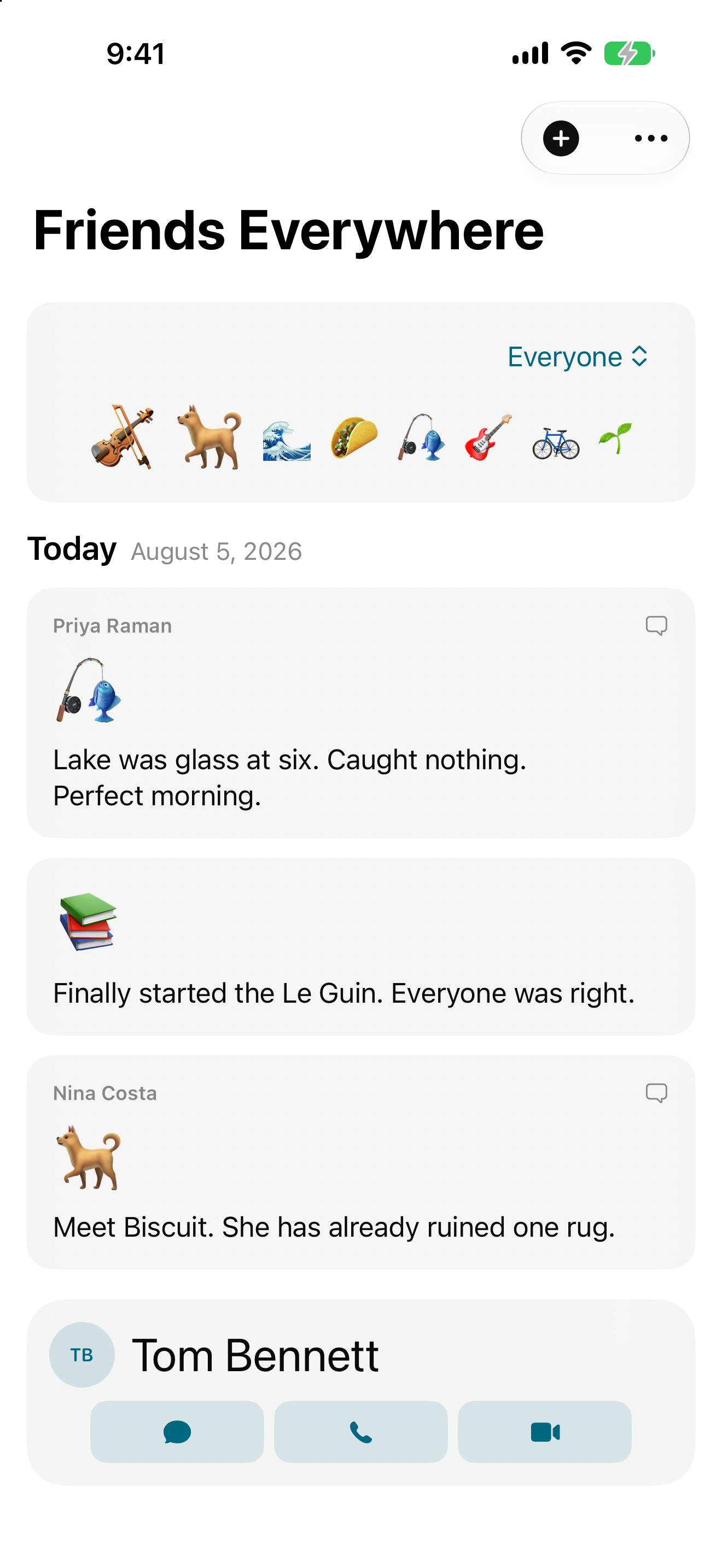
 The core one-screen experience: the feed, with Keep Up in a bar along the bottom.
Unsocial media. Share with your friends, and get a daily nudge to call someone.
Keep Up
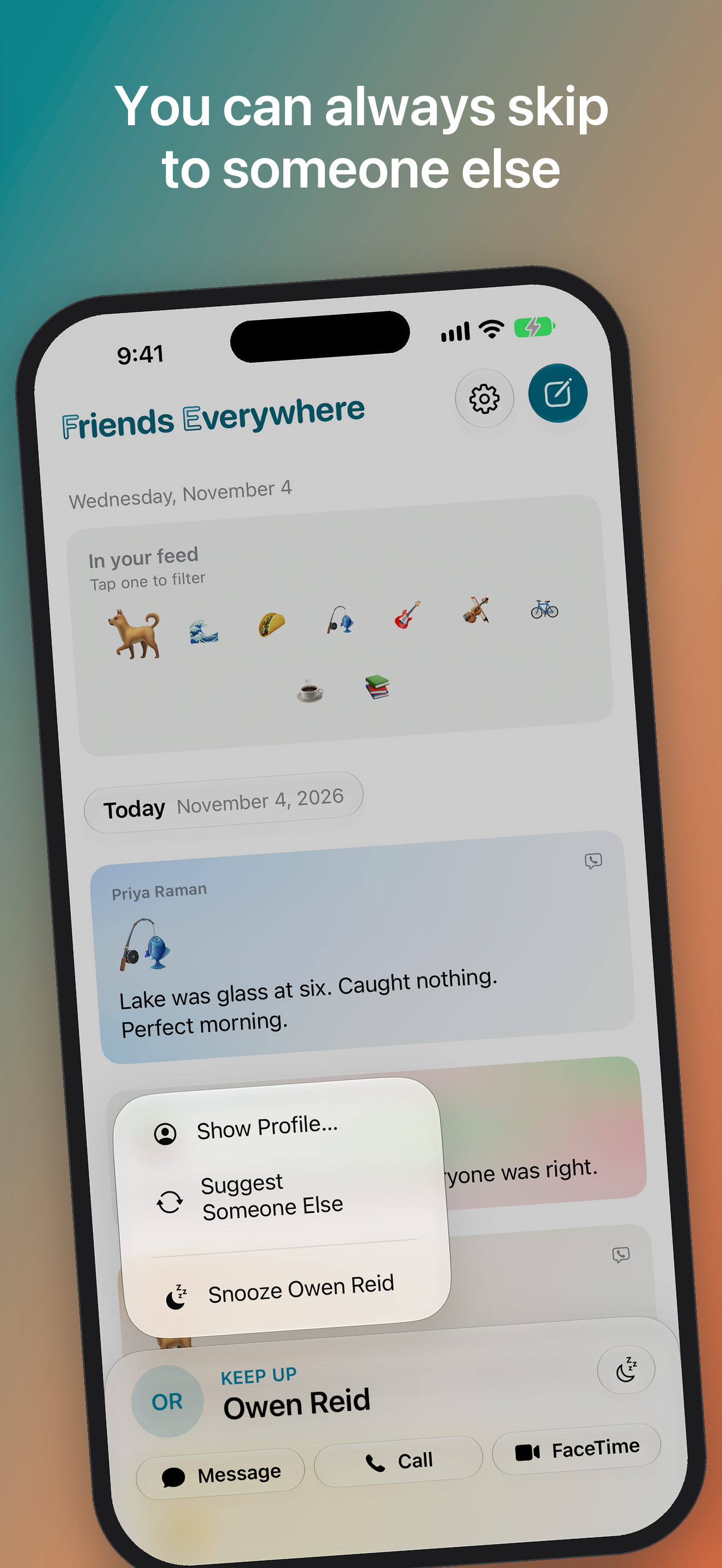
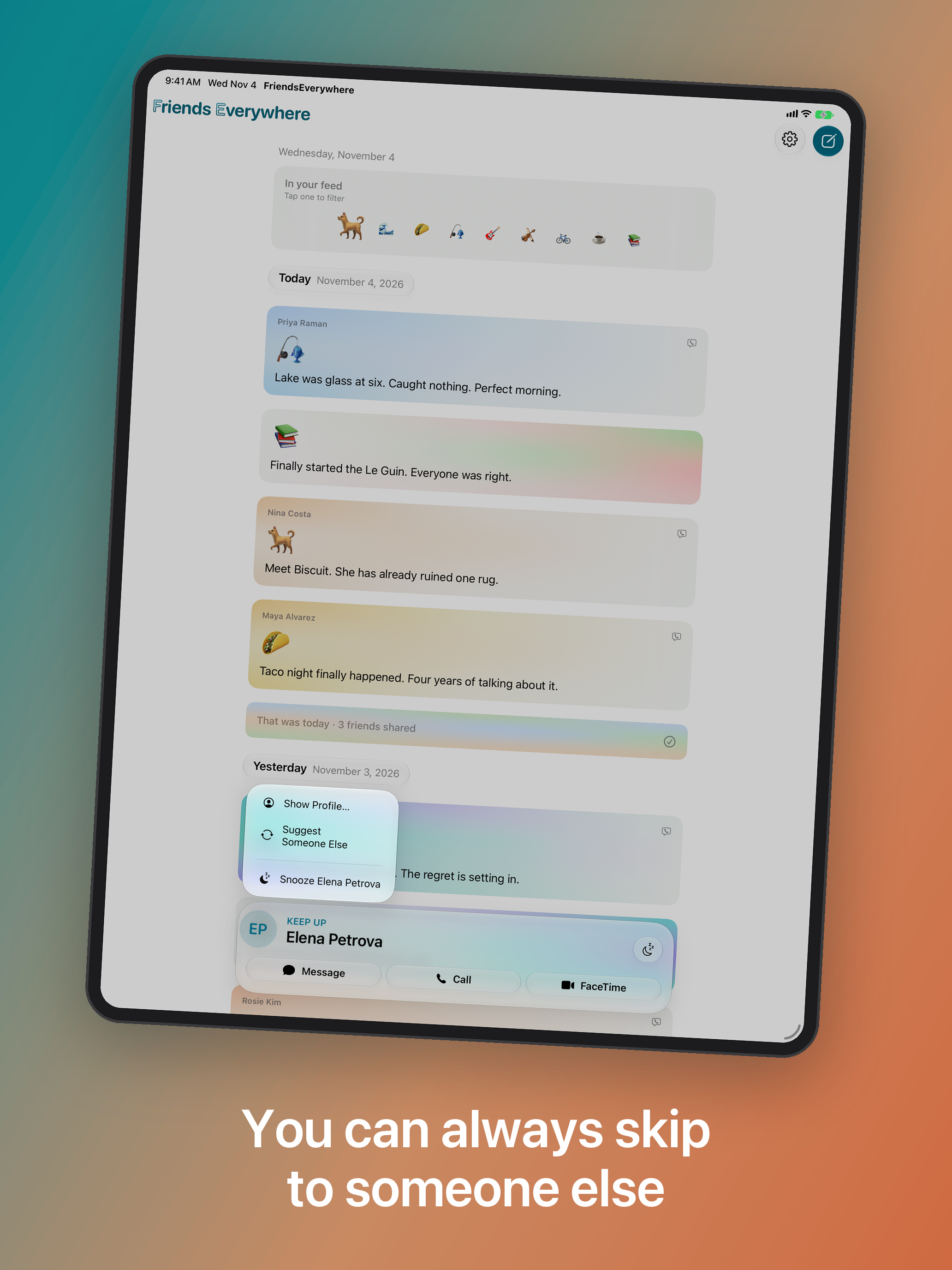
One reminder with a new person from your group to call. Message or FaceTime them, or snooze and see another suggestion.
Reminders are a random pick, and everyone starts with an equal chance. Snooze to not see them again today, and lower their chance for next time. When the app knows you did catch up with someone, it lowers their chance a little bit too, so you'll get more fresh suggestions from your friend group.
Your feed
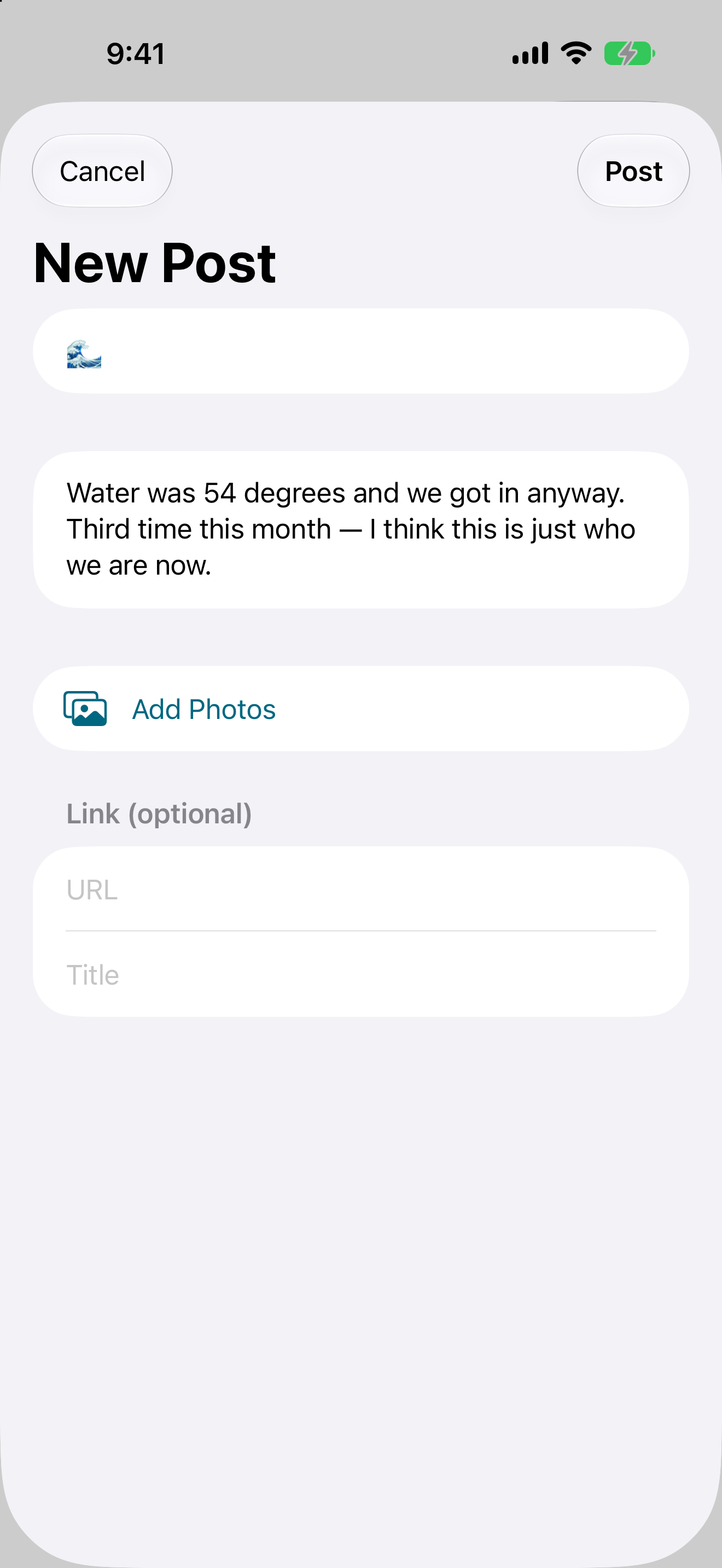
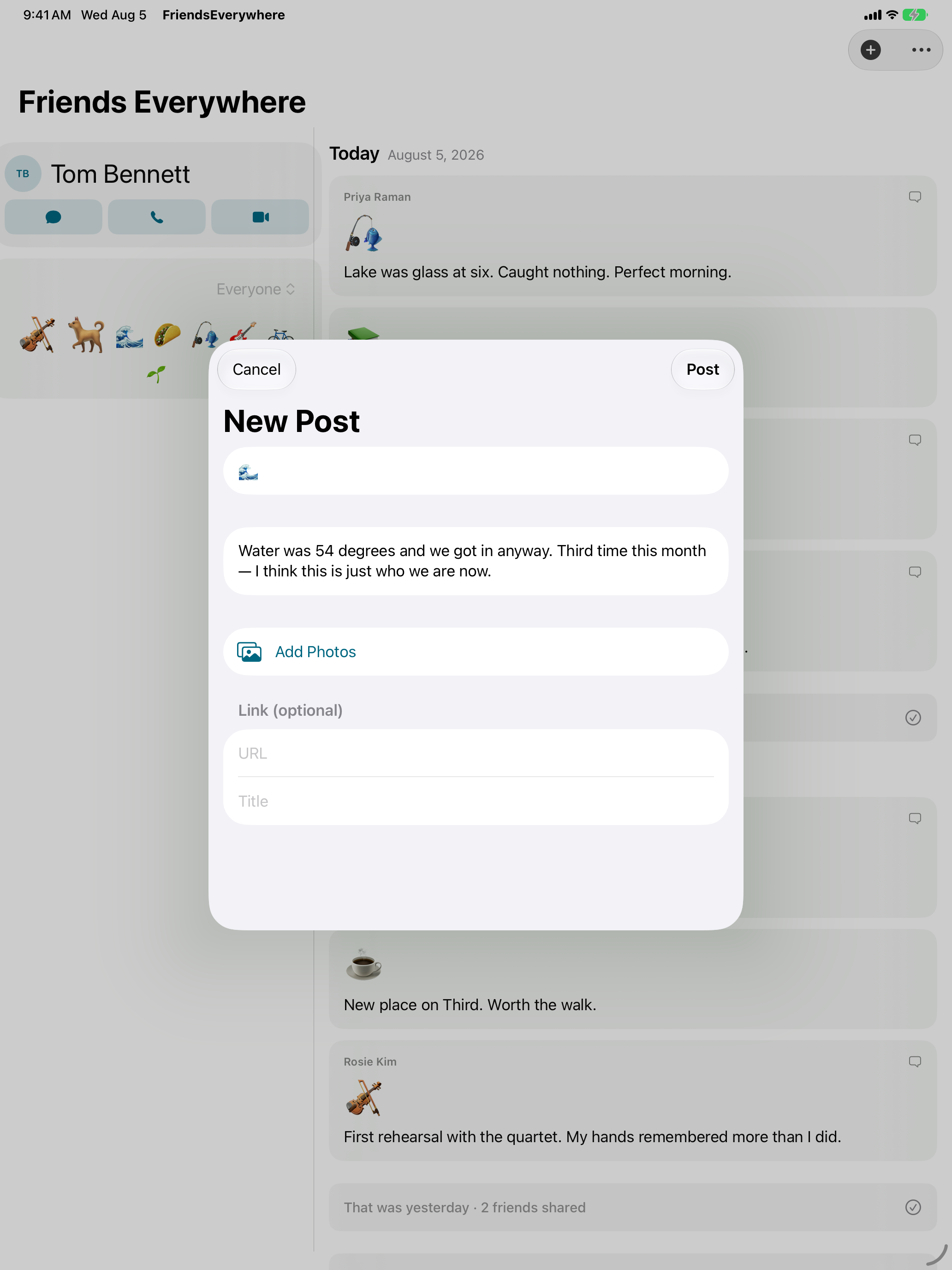
Share an emoji, add words, photos or a link.
Only people you've invited can see it. Add friends by sending them a message. Nothing in the app is public.
No likes or comments. Reply with a real connection by sending a message or call.
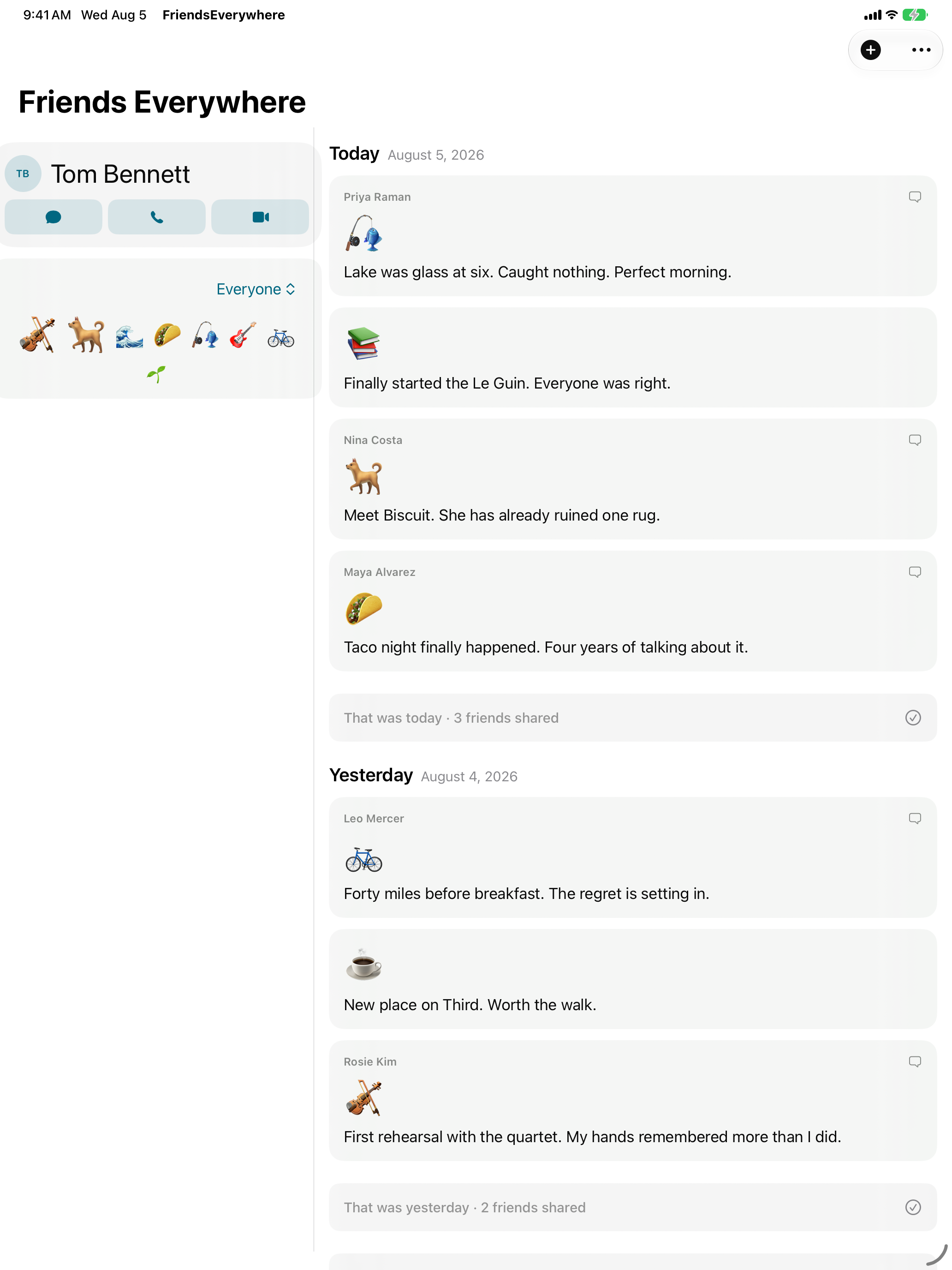
A feed you will finish. Posts group by day, newest first. Reach the end of a day and it tells you so. Days you've already read collapse to a single line. Checking in takes seconds, and then you're done.
Muting
Mute someone for a day, a week, or a month, and their posts disappear from your feed and stop notifying you on all your devices. The mute ends by itself, and nobody is told.
Your data is not ours
There's no Friends Everywhere server and no Friends Everywhere database.
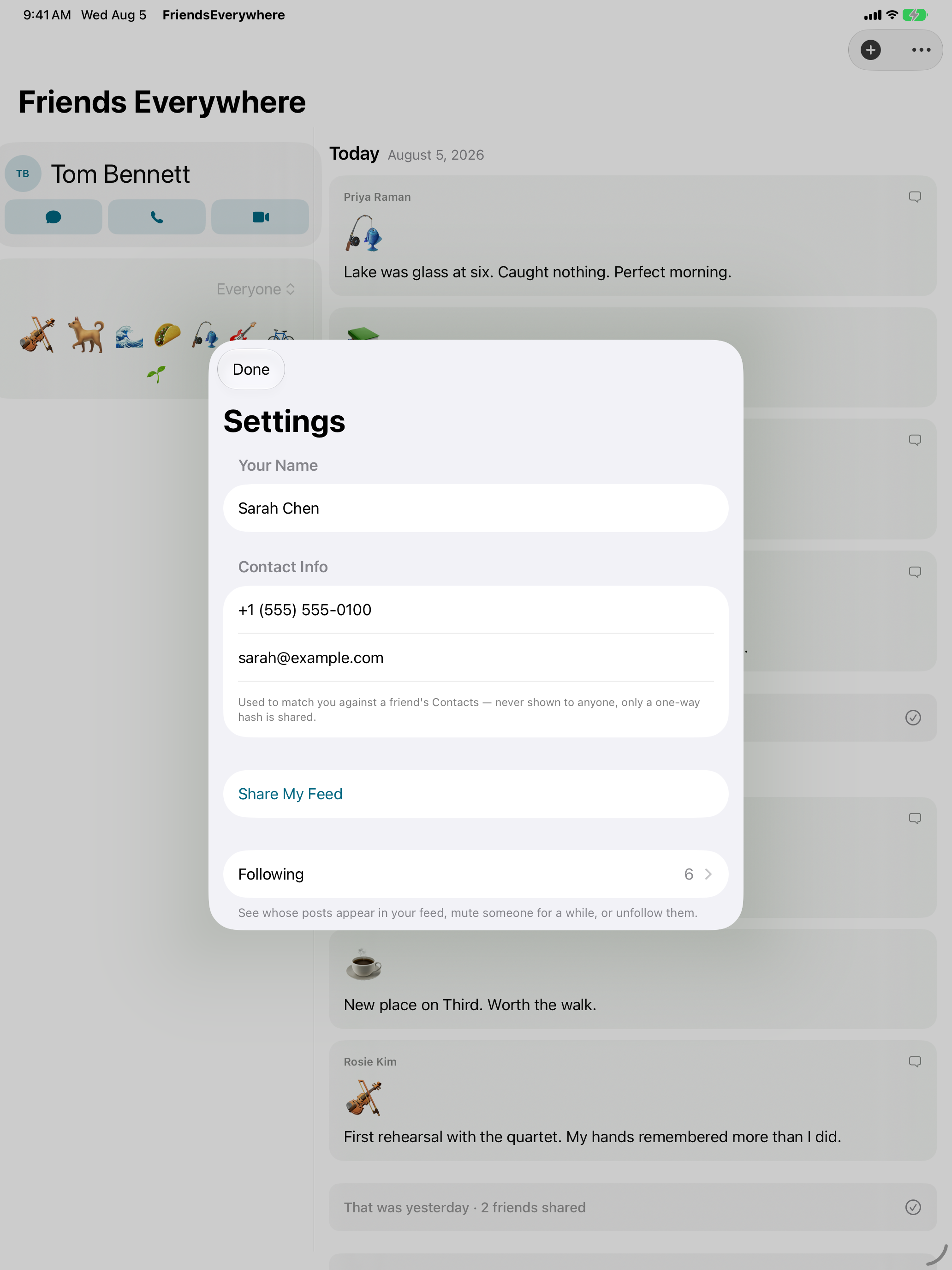
Your posts and photos stay in your own iCloud account. Everyone you invite gets a private read-only share, sent one at a time, and you can revoke it from your iPhone or iPad whenever you want. Your friends' posts stay in their iCloud.
We can't read your posts (and we don't want to) because they never reach anything we run. The app has no analytics and no third-party SDKs, and there's nothing on our side which could or would send data.
iPhone and iPad
- iPhone: one screen, no tabs.
- iPad: a wider feed down the middle, with Keep Up along the bottom.
- Widgets: Keep Up on your Home Screen, an emoji cloud of what your friends have been sharing, and a shuffle of their recent photos. On the iPhone Lock Screen, Keep Up and the emoji from a friend's latest post.
Free, with no ads.
Screenshots
Privacy
Friends Everywhere collects no data. There is no developer server and no developer database. The developer operates no infrastructure that your content passes through.
Your posts and photos are stored in your own iCloud account, in your personal CloudKit database. When you invite someone to your feed, Apple's CloudKit sharing gives that specific person read-only access. From iPhone or iPad, Apple's sharing sheet shows you everyone who currently has access to your feed and lets you remove any of them at any time. Posts from friends live in their iCloud accounts and are shared to you the same way, and you can stop following any feed from Settings.
Your contacts never leave your device. The rotation behind Keep Up (who is in it, how recently you reached out, what you've snoozed) is stored locally on your device and is not transmitted anywhere.
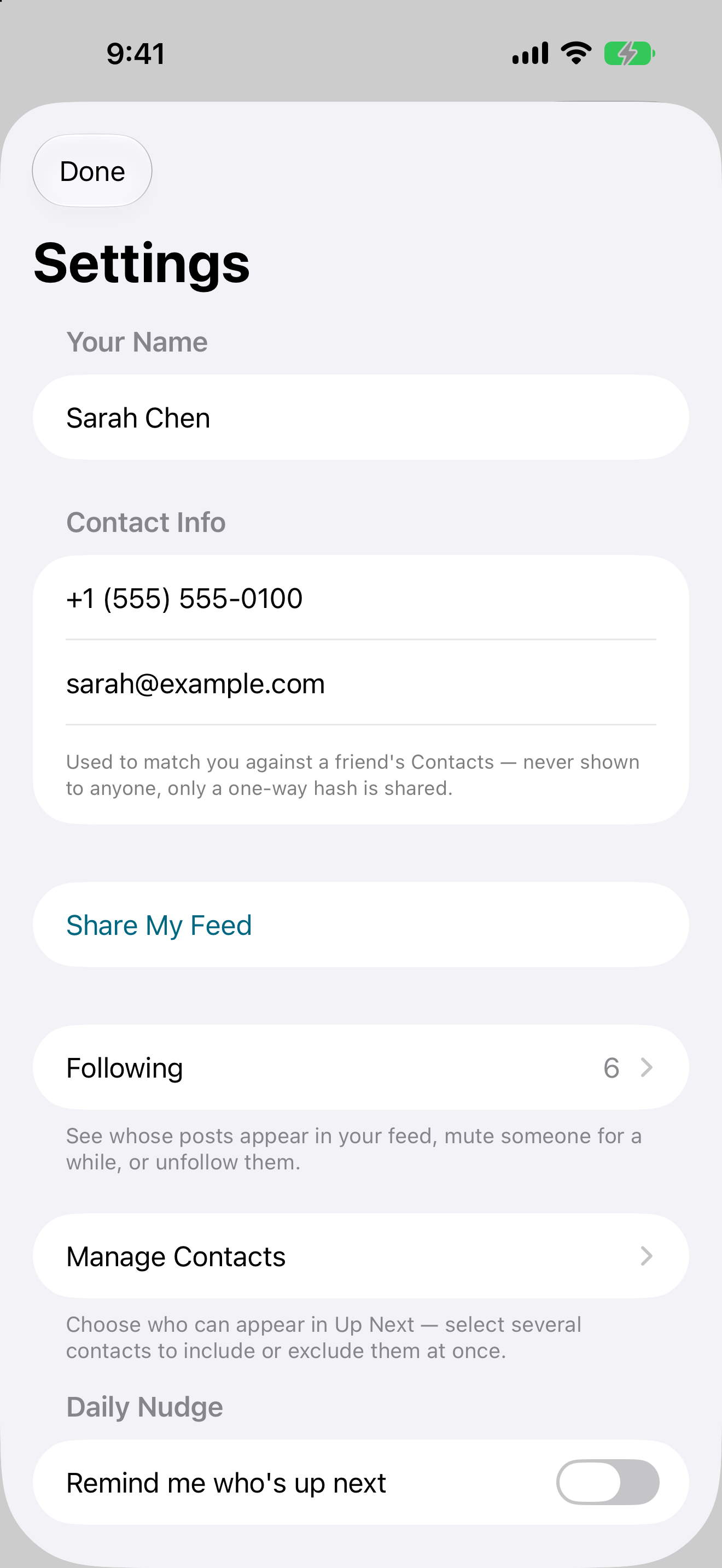
Matching friends to your address book is done on-device. To let your friends recognize you, the phone numbers and email addresses you choose to share are normalized and SHA-256 hashed before being written to your shared feed, alongside a display name. Your friends' devices hash their own contacts locally and compare. This keeps handles from being read casually by someone inspecting the data. It is not presented as protection against a determined attacker with a list of numbers to test.
No analytics, no tracking, no advertising, no third-party SDKs. The app does not use the advertising identifier and does not track you across apps or websites.
Notifications are generated on your device or delivered through Apple's push service for shared-feed updates. Their content is not visible to the developer.
The developer's only visibility into Friends Everywhere is the aggregate download and crash reporting that Apple provides to every developer, which is not tied to your content or your friends.
Questions about how Friends Everywhere works, your data and iCloud storage →